Every summer we take calls that begin "we've got a bees nest" and end with us explaining, politely, that the customer has wasps. It happens the other way round too, and that mistake matters far more, because it can end with a protected pollinator being destroyed for no reason.
So here is the honest version, including the part where we tell you that you may not need a pest controller at all.
The quickest way to tell them apart
Forget colour first. Plenty of bees are stripey and plenty of people picture wasps as brighter than they are. Look at the shape and the surface instead.
- Wasps are slender with a pronounced narrow waist, and they look smooth and glossy, almost varnished. The yellow is a hard, bright lemon.
- Honey bees are smaller than most people expect, rounder, and covered in fine hair. The colouring is warm amber and brown rather than yellow and black.
- Bumblebees are unmistakable once you have seen one properly: large, round, extremely furry, and slow and loud in flight.
Behaviour gives it away just as reliably. A bee at a picnic table is passing through. A wasp at a picnic table is interested in what is on it. If the insect is landing on your drink, your plate or your bin, it is a wasp, particularly from late summer onwards when wasps switch to hunting sugar.
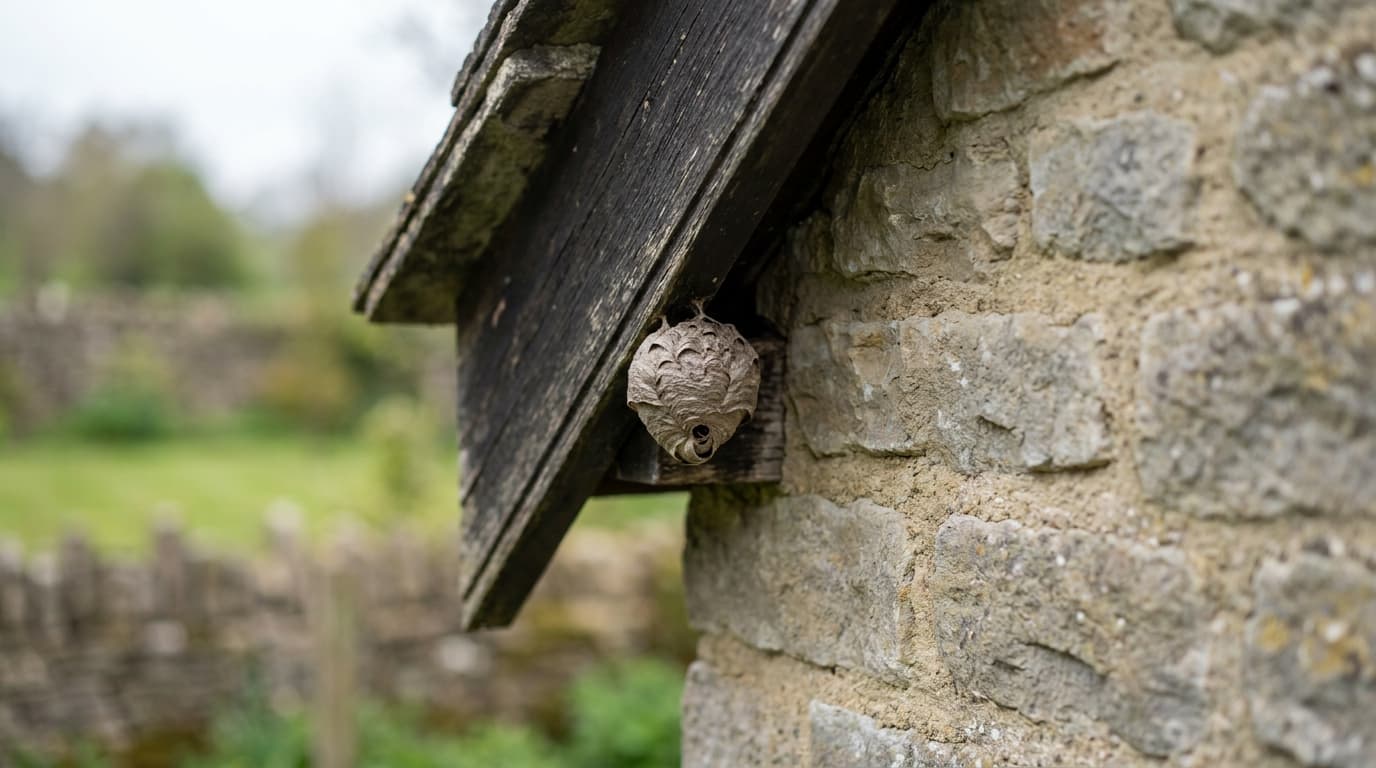
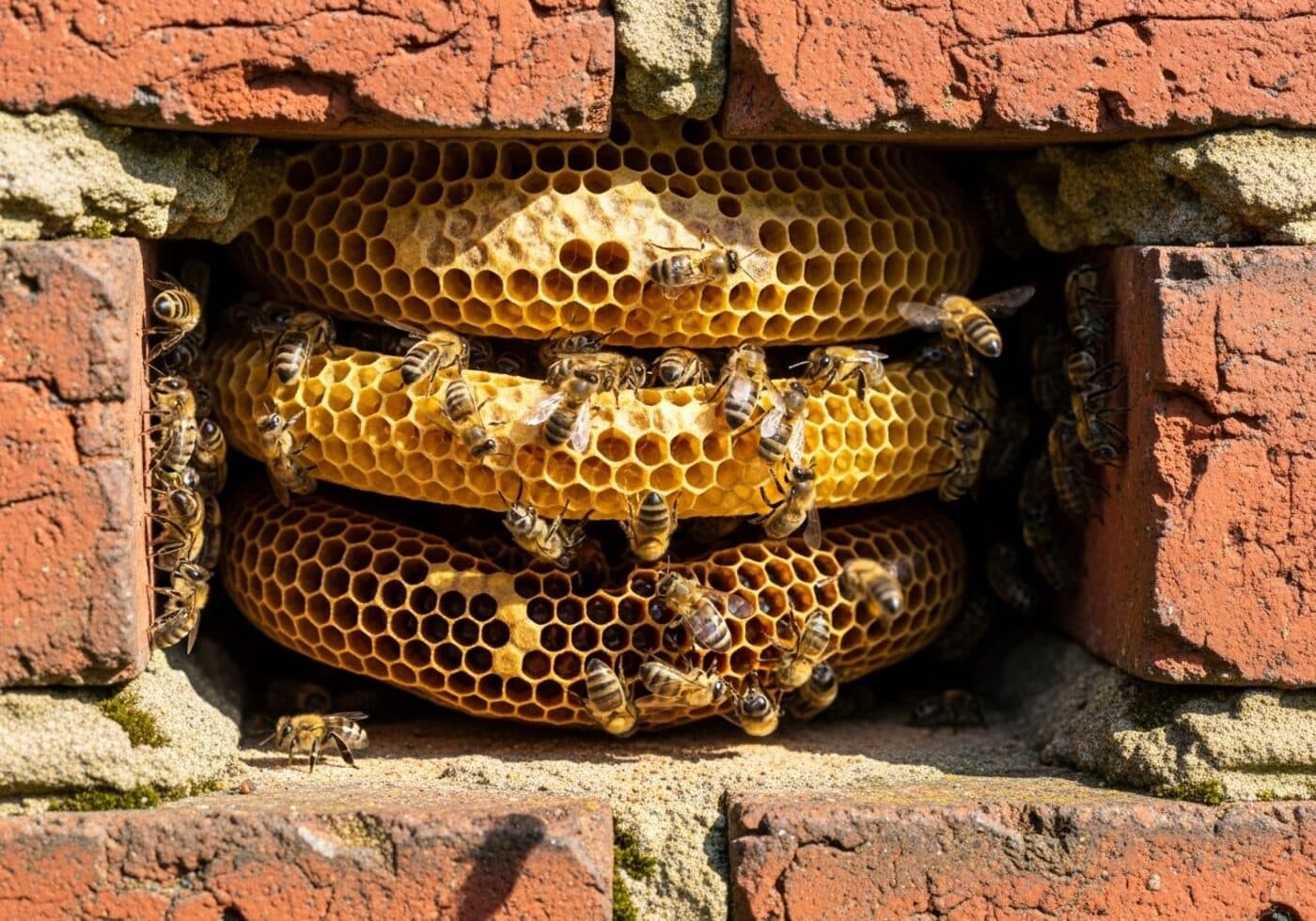
The nest tells you too. Wasps build that familiar grey papery structure, layered and roughly spherical, out of chewed wood. If you can see a golf ball or football sized grey paper nest, you have wasps. Honey bees in a building instead occupy a cavity, a chimney or a roof void, and you will see a steady two-way stream of traffic at a single small entry point rather than a visible nest.
Why the difference changes everything
Around a quarter of UK bee species are considered endangered. Bumblebees should not be destroyed, and under British Pest Control Association guidance honey bees are not treated as a pest to be exterminated. They are relocated by a beekeeper.
That is not a marketing position, it is simply how the industry is expected to operate, and it is why a reputable company will refuse work rather than treat a honey bee colony that poses no genuine risk. Treatment is reserved for cases where there is a serious threat to human health, and even then it is a last resort after relocation has been ruled out.
What to do if it is honey bees
If you have a swarm, which usually looks like a dense cluster of bees hanging from a branch, a fence post or a wall, the answer is not a pest controller. It is a beekeeper, and the service is normally free.
The British Beekeepers Association runs a swarm collector network across the country. A local beekeeper will come out, collect the swarm and rehome it, and they are generally delighted to do so. A swarm is a colony looking for a new home, it is usually docile because the bees have gorged on honey before leaving, and it will often move on within a day or two by itself.
An established colony inside a structure is harder. Bees in a chimney or a wall cavity may have been there for years, and removing them properly means opening up the structure, which is a building job as much as a bee job. A beekeeper can advise on whether removal is viable. What we would not do is treat it because it is inconvenient.
When it genuinely is a wasp problem
Wasps are a different matter. They are not protected, a mature nest can hold several thousand insects by late summer, and a nest near a doorway, a loft hatch or a play area is a real hazard, especially for anyone with a sting allergy.
Treatment is quick, usually a single visit, and the nest is normally quiet within hours. What it is not is a job for a ladder and a can from a DIY shop. Disturbing a nest without protective equipment can provoke hundreds of insects at once, and most of the serious sting incidents we hear about started with someone trying to save a call-out.
Solitary bees, and the nest that is not a nest
One more common call is about small bees emerging from mortar joints, airbricks or bare soil in spring. These are usually solitary bees such as masonry or mining bees. They do not form colonies, they are barely able to sting, and they are gone within weeks.
They are worth knowing about because masonry bees can exploit already soft or perished mortar. The right response is repointing once they have finished the season, not insecticide. Treating them achieves nothing and removes a pollinator.
What we will actually tell you
If you send us a photograph and it is a honey bee swarm, we will tell you to ring a beekeeper and point you at the BBKA. If it is bumblebees in a compost heap or a bird box, we will tell you they will be gone by autumn and to leave them alone. If it is solitary bees in your brickwork, we will tell you to book a repointing job for the winter.
If it is wasps, which is what it usually is from July onwards, we will come out and deal with it properly.
We are a British Pest Control Association member company, and being able to say no to work is part of what that membership is supposed to mean. If you are not sure what you are looking at, send us a photo and we will tell you straight. If it is wasps, you can read how we treat them or request a free quote.